Garden Beds That Bring Birds and Pollinators to Your Yard
You do not need a meadow to see more birds and butterflies. A regular suburban yard in Hamilton or Ancaster can do a lot with a few well-planned garden beds. Here is what makes the difference.
Plant in layers
Wildlife uses a yard at different heights. A bed with only low flowers gives food but no shelter. Try to include:
- A small tree or two for perching and nesting
- Shrubs for cover, especially ones that hold berries
- Perennials and grasses underneath for nectar and seed
Evergreens earn their place too. A row of cedars along the fence line gives birds shelter in winter when everything else is bare, and gives you privacy at the same time.
Keep something blooming from spring to fall
Bees and butterflies need food all season, not just in June. When you choose plants, look at bloom times and aim for something in flower in spring, summer and fall. Planting in groups of three or more of the same plant makes it easier for pollinators to find them.
Since Hamilton sits around hardiness zone 6, we pick plants rated to zone 5 so they come back reliably.
Add water
A shallow dish or birdbath is enough. Keep it clean and refill it often so it does not become a mosquito nursery. A few stones in the dish give bees and butterflies a place to land.
Go easy on the fall cleanup
A perfectly tidy garden is not much use to wildlife. A few easy habits help:
- Leave seed heads standing through winter for the birds
- Leave some leaves in the beds, where insects overwinter
- Hold off cutting perennials back until spring
The front yard can stay neat while a back bed is left a little looser.
Mulch and soil
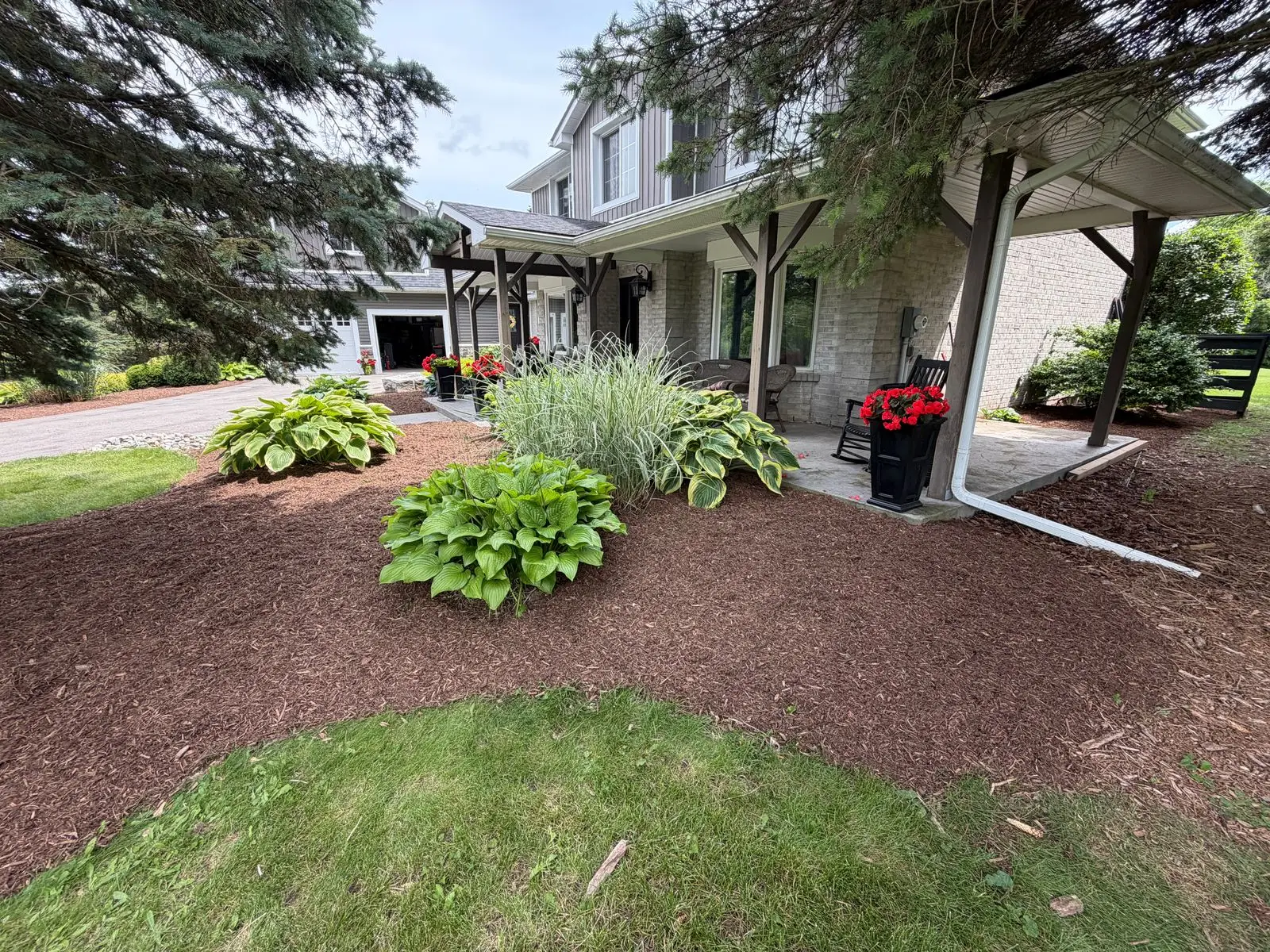
A 2 to 3 inch layer of mulch keeps weeds down and holds moisture in our clay soil, which means healthier plants and less spraying. Keep it off trunks and stems. Leaving a small patch of bare soil in a sunny corner gives ground-nesting bees somewhere to go.
Keep the lawn, just less of it
You do not have to give up grass. Widening the beds along a fence or swapping an awkward corner of lawn for planting gives wildlife more room and gives you less to mow.
We design and plant garden beds across the Hamilton area. Call 905-531-2049 for a free estimate and tell us what you would like to see out your window.