Native Plants That Handle Hamilton's Clay Soil
Gardening on Hamilton clay can be frustrating. It is sticky and wet in spring, hard as brick in August, and plenty of garden centre plants give up on it. Native plants are a practical answer. They grew up in this soil and this weather, so once they are established they ask for very little.
Why native plants make sense here
- They are used to clay and to our freeze and thaw winters
- After the first year or two they need little extra watering
- They do not need rich soil or regular feeding
- They tend to be long lived, so you are not replanting every few years
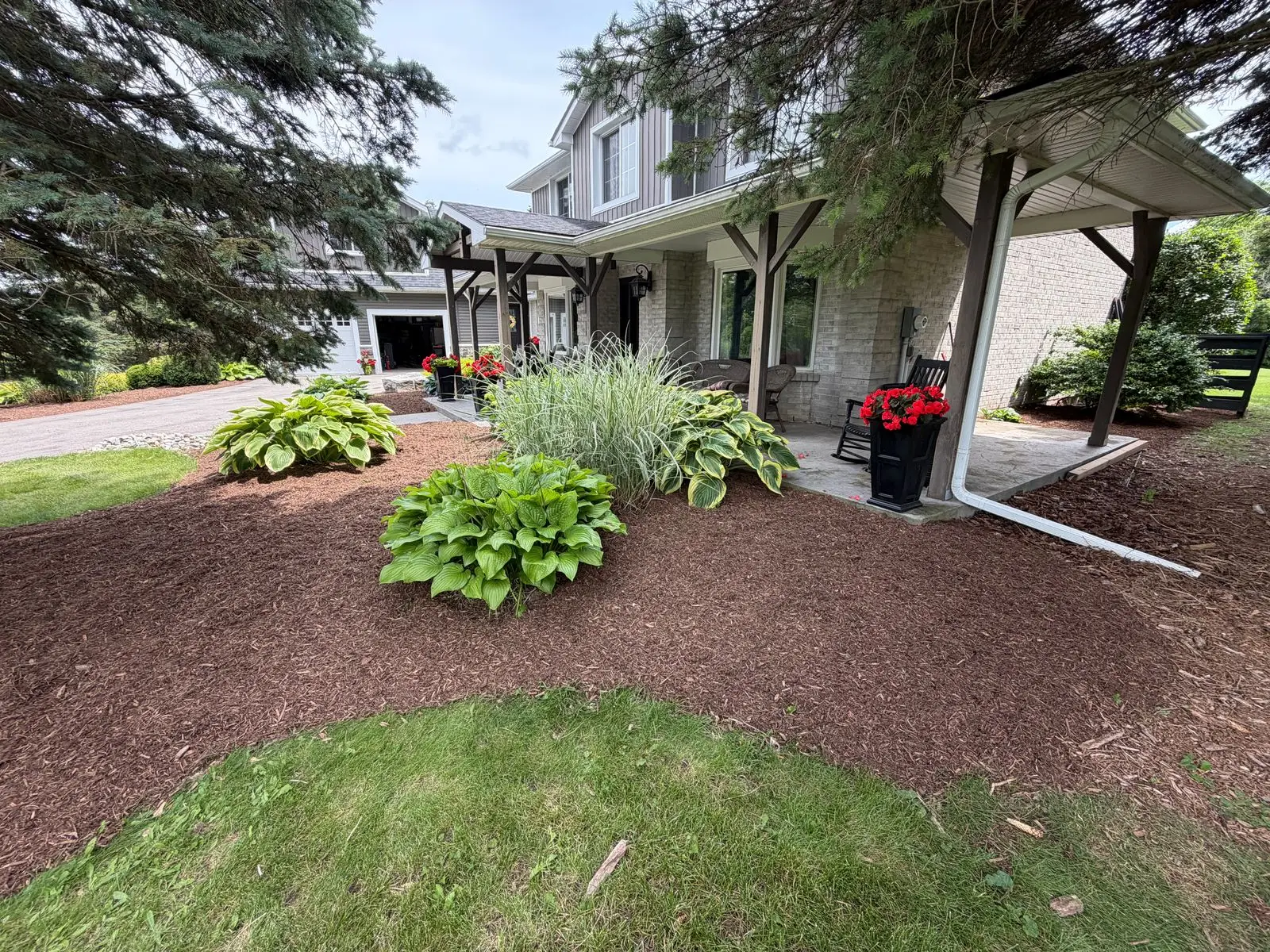
A native garden does not have to look wild. Planted in groups with clean bed edges and mulch, it can look as neat as any other.
Native plants worth knowing
These are commonly sold in southern Ontario and are known for tolerating clay. Check the tag for sun and moisture needs before you buy.
Trees and large shrubs
- Serviceberry: white spring flowers, berries, good fall colour
- Red osier dogwood: handles wet spots, bright red stems in winter
- Ninebark: tough, fast and good as a screen
Perennials and grasses
- Purple coneflower and black-eyed Susan: long summer bloom in full sun
- New England aster: late colour when most of the garden is done
- Wild bergamot: a favourite for pollinators
- Switchgrass: upright, stands through winter, fine in heavy soil
Planting in clay
Dig the hole wide, not deep, and set the plant so the top of the root ball is level with the ground or slightly above it. A deep hole in clay acts like a bucket and holds water around the roots. Rough up the sides of the hole so roots can push out into the soil around it.
Hamilton is around hardiness zone 6. Most of the plants above are hardy well beyond that, but as a habit we choose plants rated to zone 5 for a margin of safety.
First year care
Native does not mean no care at the start. Water new plants deeply through the first season. Spread mulch 2 to 3 inches deep to hold moisture and keep weeds down, and keep it off the stems. After that, a spring cleanup and the odd weeding is most of the work.
Mixing native and traditional
You do not have to choose one or the other. Many homeowners keep their hostas and hydrangeas and add native plants in the tougher spots: the wet corner, the hot strip by the driveway, the back of the bed.
We design and plant garden beds in Hamilton, Ancaster and nearby. Call 905-531-2049 for a free estimate.