Bringing an Overgrown Backyard Back to Usable
Maybe you bought a house where the yard was ignored for ten years. Maybe the back corner of your own lot got away from you. Either way, a backyard full of brush, vines and volunteer trees is not a lost cause. It just has to be taken back in the right order.
Step one: see what is actually there
An overgrown yard hides things. Before any machine goes in, walk it and look for:
- Old fences, posts, concrete pads and buried junk
- Trees worth keeping and trees that are dead, leaning or too close to the house
- Where the property line really is
- Low areas where water sits
Decide what stays before the cutting starts. A healthy mature tree in the right spot is worth working around.
Step two: cut the brush and saplings
Tall weeds, brambles, vines and small saplings come out first. Brush cutting opens the yard up so you can finally see the ground and the shape of the lot. On larger rural properties around Ancaster, Glanbrook and Flamborough, this can mean full land clearing.
Cutting alone is not the end of it. Many saplings and shrubs sprout again from the stump, so the roots of anything in the future lawn area need to come out.
Step three: remove the trees that have to go
Self-seeded trees along a fence line grow fast and end up crowding each other, lifting fences and shading out everything below. Dead and damaged trees are a hazard in a storm. Our tree removal page explains how we handle them. Trees worth keeping can be cleaned up with proper trimming instead.
Step four: fix the grade
Once the yard is clear, the ground is usually rough: stump holes, ruts, humps and old garden beds. This is the time to fix it, while nothing is in the way.
Hamilton yards are mostly heavy clay that holds water, so the shape of the ground matters. Soil should slope at least 2 percent away from the foundation, and the water needs an outlet, not just a new place to sit. See our excavation and grading page for more.
Step five: topsoil, then sod or seed
Bare clay will not grow a lawn. It will grow the same weeds you just removed. We loosen the clay and spread screened topsoil, at least 4 inches for sod.
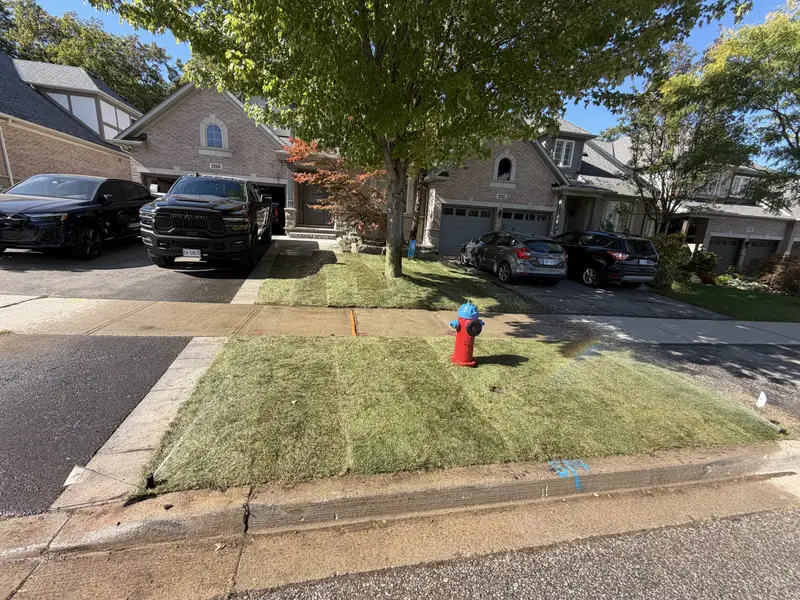
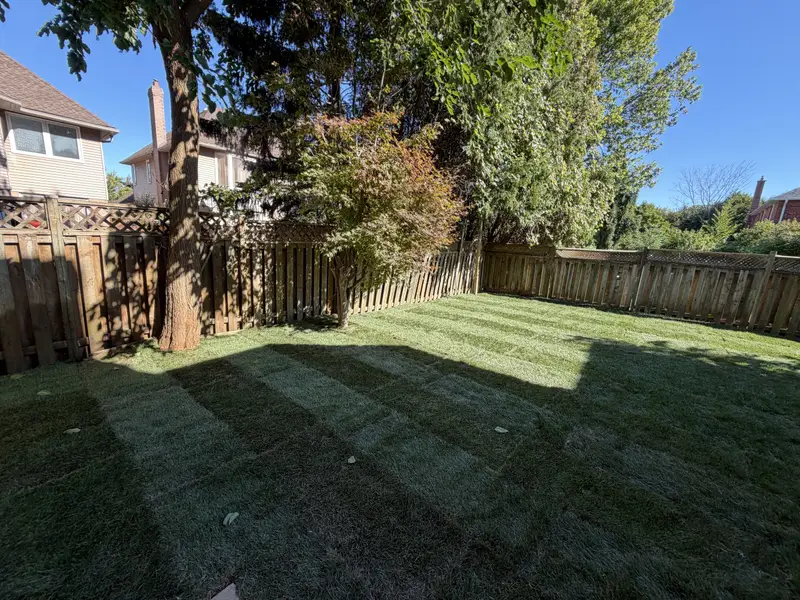
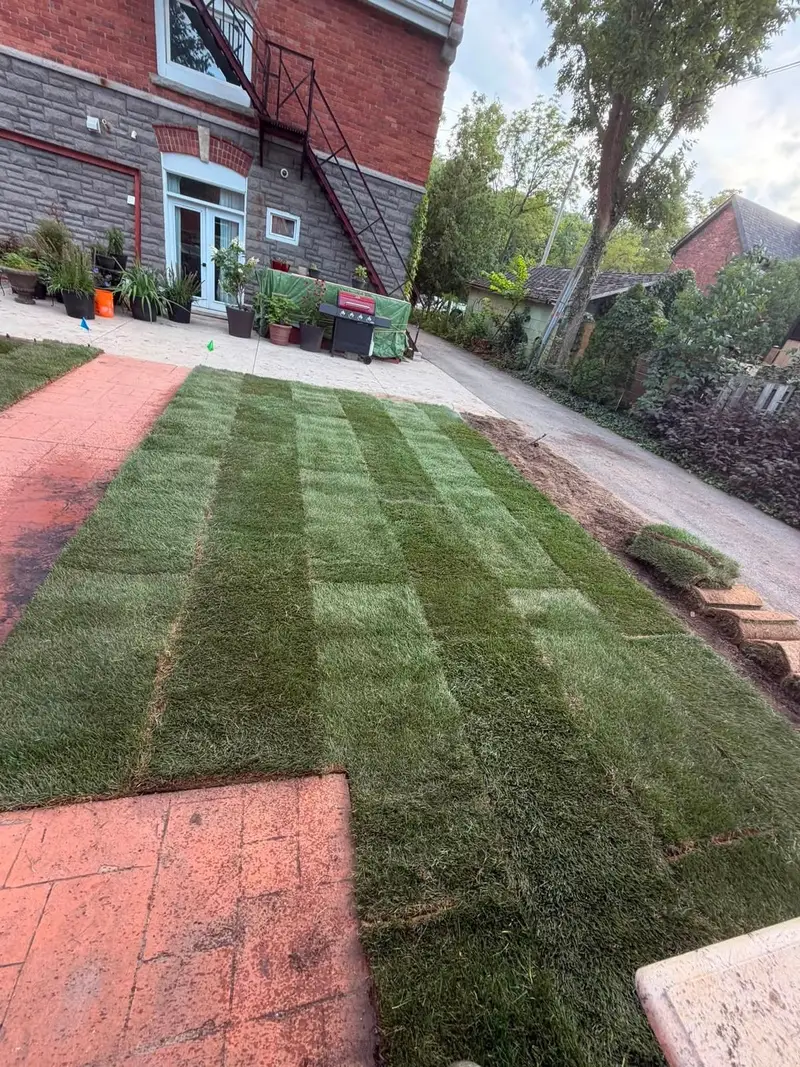
- Sod gives you a finished lawn right away and leaves no bare soil for weeds. Spring and September to October are the best times.
- Seed costs less on a large area and does best from mid August to the end of September.
Our sod installation page covers the full process.
If the yard has been written off for years, call 905-531-2049. We will walk it with you and give you a free estimate.