Garden Bed Design: Shapes, Edges and Plant Layers
A good garden bed does not need rare plants or a big budget. It needs a clear shape, a clean edge and plants set out in the right order. Get those three right and even a plain front bed in Ancaster or on the Hamilton Mountain looks like someone planned it.
Start with the shape
Lay a garden hose on the ground and step back to the street. Look for these things:
- Long, easy curves. One or two sweeping curves look natural. A lot of small wiggles look nervous and are hard to mow around.
- Enough depth. A bed that is only a foot or two deep in front of the house can only hold one row of plants. Four to six feet gives you room for layers.
- Straight lines where they fit. Beside a driveway, walkway or modern house, a straight bed often looks better than a curve.
Give the bed a real edge
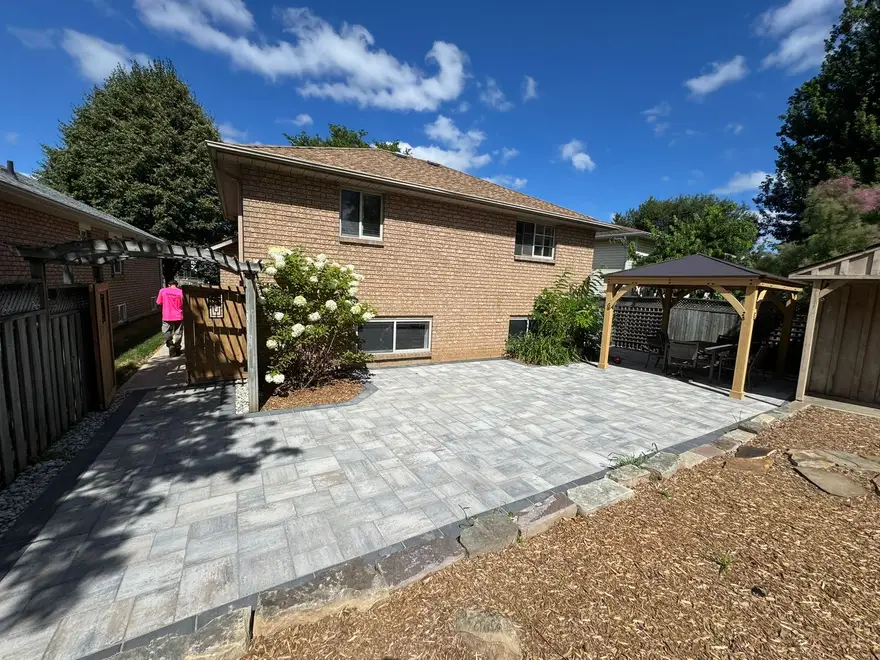
The edge is what makes a bed look finished. A crisp spade-cut edge is the simplest option and only needs to be recut once or twice a year. A row of pavers or a stone border set flush with the lawn costs more but lets the mower wheel run along it, so there is less trimming.
If the bed sits on a slope, a low garden wall can hold the soil and give you a level planting area. Our retaining wall page covers how those are built.
Plant in layers
Think of the bed as three rows.
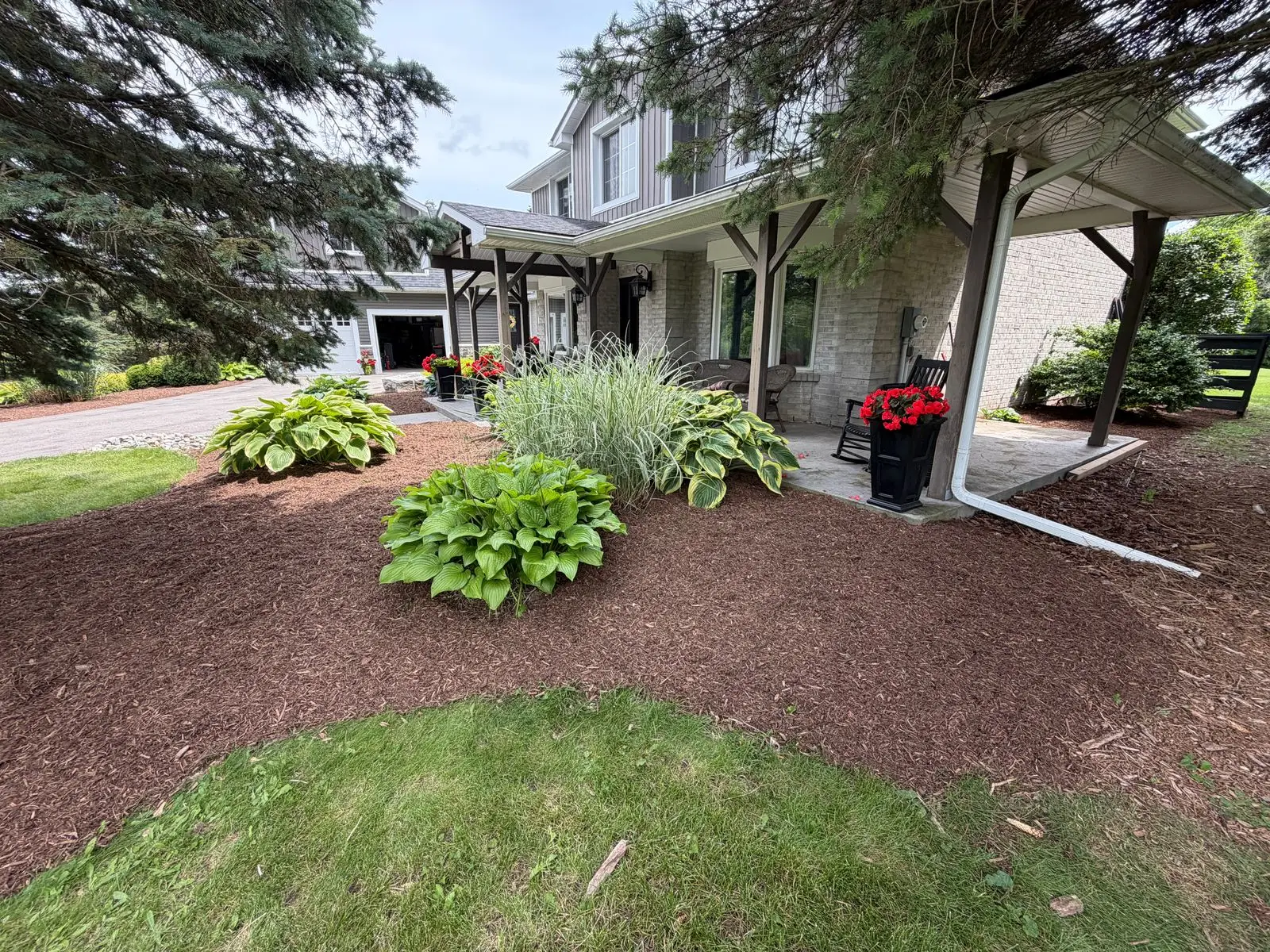
- Back: taller shrubs or evergreens that give structure all year.
- Middle: medium shrubs and ornamental grasses.
- Front: low perennials and groundcovers that spill toward the edge.
Plant in groups of three or five of the same thing instead of singles. Leave space for the full grown size. A bed that looks a little thin in the first year is usually right.
Hamilton sits around hardiness zone 6. We suggest choosing plants rated to zone 5 so a hard winter does not take them out.
Deal with the clay
Heavy clay holds water, and many plants hate wet roots. Raise the bed slightly with good soil so it drains, and avoid planting in the lowest spot in the yard unless the plant likes it wet.
Finish with mulch
A 2 to 3 inch layer of mulch holds moisture, keeps weeds down and makes the plants stand out. Keep it pulled back from trunks and stems. Piled against the bark, it causes rot.
We design and plant garden beds across Hamilton and Ancaster. See our landscape design and installation page, or call 905-531-2049 for a free estimate.