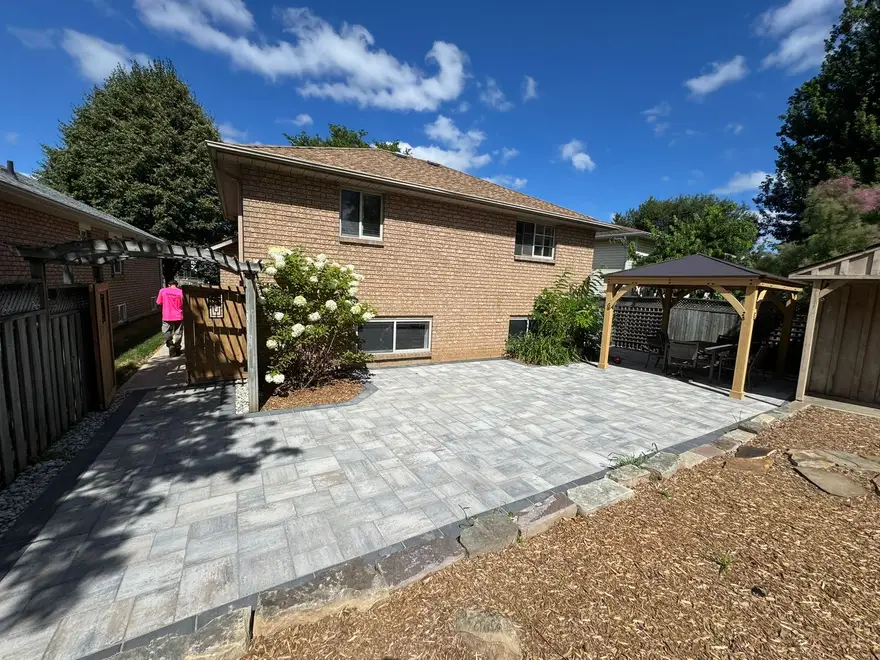
Why a Proper Base Means Your Patio Is Built Once
People talk a lot about sustainable landscaping. For hard surfaces, we think it comes down to one thing: build it once. A patio that sinks and gets torn out after a few winters means double the stone, double the trucking and double the cost. Nearly every failed patio we are asked to look at in Hamilton failed from below.
The ground here works against you
Most yards in Hamilton and Ancaster are heavy clay. Clay holds water, and wet ground swells when it freezes and settles when it thaws. A patio sitting on a thin or poorly drained base rides up and down with it. After a few seasons you get dips, lifted corners and puddles.
The pavers are rarely the problem. The base is.
What a proper patio base looks like
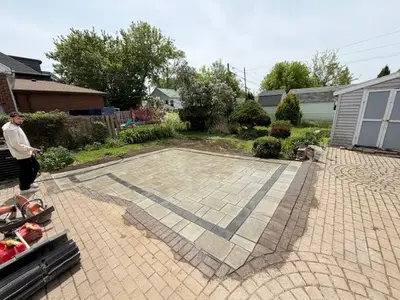
This is how we build every interlock patio:
- Dig to undisturbed clay. All topsoil and loose fill comes out. Soft material under a patio will keep settling.
- Geotextile fabric over the clay. It keeps the stone base from slowly mixing into the clay. We use it on every job.
- 3/4 inch clear gravel, compacted in thin lifts. Typically 8 inches for a patio. Compacting it a few inches at a time is what makes it solid all the way through.
- A one inch bedding layer (HPB, high performance bedding). Just enough to seat the pavers evenly.
- Concrete edge restraint. It stops the outside rows from creeping.
- Polymeric sand in the joints. It locks the pavers together and resists washout and weeds.
We never put stone dust or screenings under pavers. They hold water. Water in the bedding layer freezes, and the surface moves. It is a common shortcut, and it is a common reason patios fail.
Slope matters as much as depth
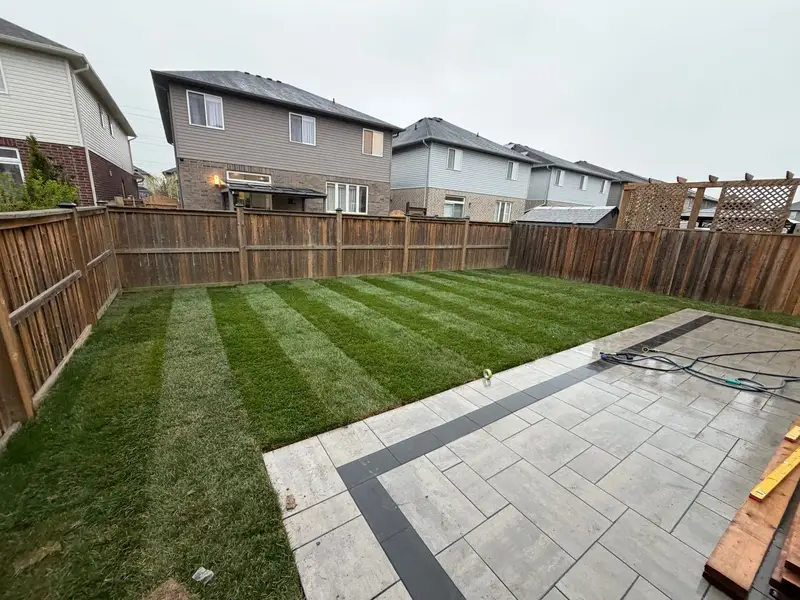
A flat patio is a patio with puddles. We slope the surface about 2 percent, which is a quarter inch per foot, away from the house. Water runs off the pavers and away from the foundation instead of soaking into the base.
Why pavers are a low-waste choice
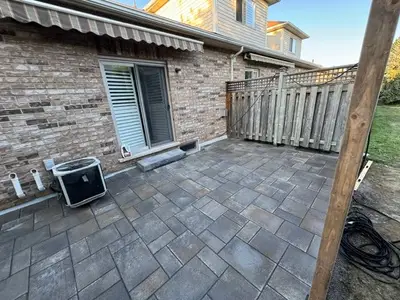
A well built interlock surface can be repaired. If a utility line needs to go under it, or a section is damaged, the pavers can be lifted and relaid. We also blend pavers from several pallets as we lay them, so natural colour differences are spread evenly across the patio.
Questions to ask any contractor
- How deep is the base, and what is it made of?
- Do you use fabric over the clay?
- What goes directly under the pavers?
- How is the edge held?
Clear answers to those four questions tell you a lot. You can see finished work in our showcases.
We are glad to explain exactly how yours would be built. Call 905-531-2049 for a free estimate.