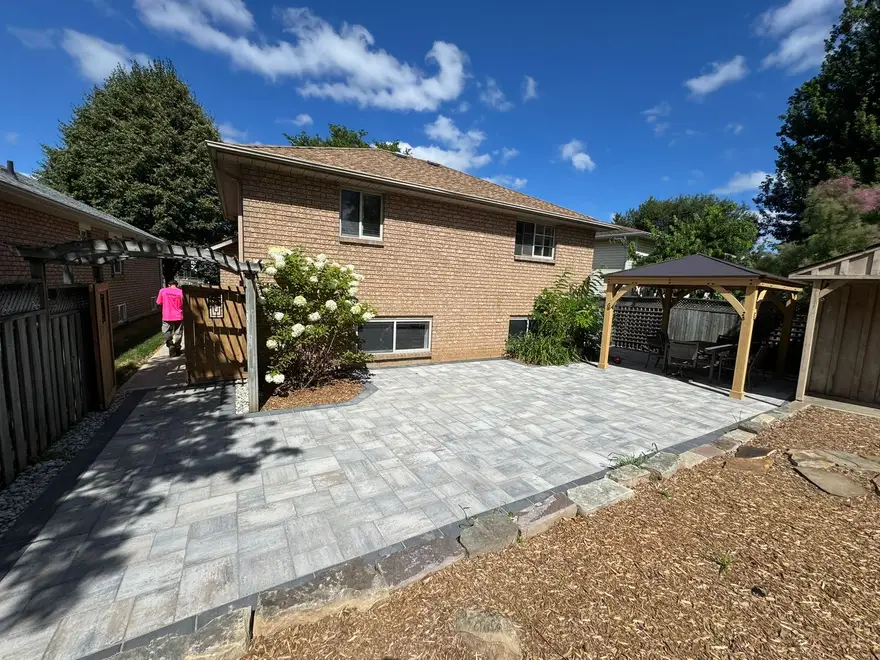
Sloped Backyard Ideas: Walls, Steps and Level Ground
A sloped backyard can feel like wasted space. The patio set slides, the kids’ ball ends up at the fence and mowing is a workout. Between the escarpment and the rolling lots in Ancaster and Dundas, we see a lot of these. The good news is that a slope gives you more to work with than a flat lot.
Work out what you need level
You rarely need the whole yard flat. Most families need one level area for a patio and maybe a second for lawn or play. Pick the spots, then let the rest of the yard stay sloped and planted. That keeps the walls shorter and the cost down.
Retaining walls
A retaining wall holds back soil so you can create a level area above or below it. It is the main tool for a sloped yard.
Two shorter walls with a planting bed between them often look better than one tall wall, and they feel less like a barrier. Height also matters for another reason: a wall 1 metre or higher, or one that carries a load such as a driveway or a structure, needs an engineer.
How a wall should be built
Most failed walls we see are leaning because water built up behind them. Clay holds water, and wet clay pushing on a wall through a freeze is a lot of force. This is how we build a retaining wall:
- A compacted levelling pad at least 6 inches deep
- The first course buried below grade so the wall cannot kick out at the bottom
- A 4 inch perforated drain pipe behind the wall
- At least 12 inches of clear stone behind the wall so water drops to the pipe
- Fabric between the stone and the soil so the drainage does not clog
The drain pipe needs an outlet, the same as any other drainage.
Steps and patios on a slope
Once the yard has levels, you need a comfortable way between them. Steps should be wide, even in height and deep enough for a full footstep. Wide steps beside a patio also work as extra seating.
A patio set into a hillside, with a low wall on the uphill side, feels sheltered and private. The wall can be built at seat height. The patio still has to slope about 2 percent so water runs off, and that water needs a path around or away from the area.
The banks and the fill
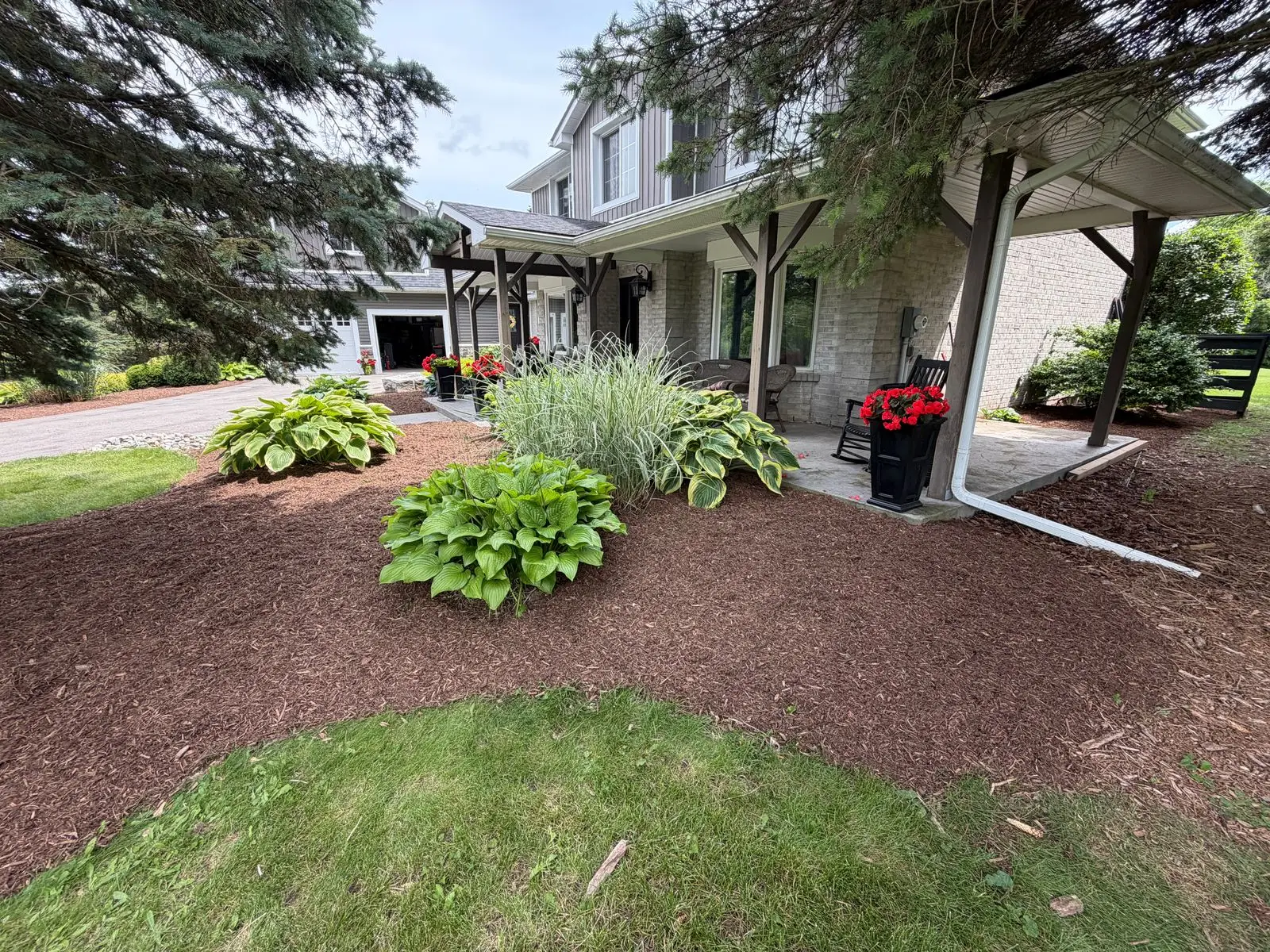
Slopes you do not level are better planted than mowed. Groundcovers, shrubs and ornamental grasses hold the soil with their roots, and mulch protects it while they fill in.
Levelling a slope means cutting soil from one place and filling another. Fill has to be compacted properly or it will settle under whatever you build on it. Our excavation and grading page covers that side of the job.
Call 905-531-2049. We will come out, look at the grades and give you a free estimate.